
KOLY · JOURNAL 002 · MADRID · OCTOBER 2026
002
El mismo camino The Same Path
Hay mañanas en las que una estación llega sin demasiadas contemplaciones. El día anterior todavía sobraba ropa y a las ocho y media se podía caminar en tirantes, buscando sombra y preguntándose cuánto verano quedaba por delante.
A la mañana siguiente, las manos dicen otra cosa. También la nariz. El aire entra más frío y limpio, con esa primera punzada que no duele exactamente, pero se nota. De repente habría venido bien una manga larga. Y uno se acuerda, con cierto resentimiento, de no haberla traído.
En Madrid el otoño puede llegar así. Sin transición. Como a veces hace la primavera, pero en sentido contrario. Antes de las ocho y veinte, las copas de algunos árboles todavía esconden los primeros rayos del sol. El parque ha amanecido, pero no del todo. Las explanadas de césped están húmedas. Los operarios van y vienen con las cortadoras y dejan detrás uno de esos olores imposibles de guardar.
Hierba recién cortada. Tierra. Agua. Aire fresco. No he encontrado un perfume que huela exactamente así, pero si existiera, probablemente sería mi favorito. Quizá porque no es sólo un olor. Pertenece a una temperatura, a una hora y a una determinada inclinación de la luz. Separarlo de todo lo demás sería convertirlo en otra cosa.
Los aspersores siguen funcionando. Hace apenas unas semanas, la hierba mojada era un buen lugar para tumbarse y escapar del calor. Ahora basta verla cubierta de agua para sentir frío. El césped es el mismo. El agua también. Lo que ha cambiado es la estación, la sensación térmica interior al mirarlos.
There are mornings when a season arrives with very little ceremony. The day before, even a light layer felt unnecessary, and at half past eight you could still walk in a sleeveless top, looking for shade and wondering how much summer was left.
The next morning, your hands say otherwise. So does your nose. The air feels colder and cleaner as you breathe it in, with that first sharpness that does not exactly hurt, but makes itself known. Suddenly, a long sleeve would have been useful. And you remember, with a certain amount of resentment, that you did not bring one.
In Madrid, autumn can arrive like this. Without transition. Much as spring sometimes does, only in the opposite direction. Before twenty past eight, the canopies of some of the trees still hide the first rays of sunlight. The park is awake, but not quite. The wide lawns are damp. The groundskeepers move back and forth with their mowers, leaving behind one of those scents that seem impossible to bottle.
Freshly cut grass. Earth. Water. Cool air. I have never found a perfume that smells exactly like this, but if one existed, it would probably be my favourite. Perhaps because it is not merely a scent. It belongs to a particular temperature, a particular hour and a particular angle of light. To separate it from everything else would be to turn it into something different.
The sprinklers are still running. Only a few weeks ago, wet grass was a good place to lie down and escape the heat. Now simply seeing it covered in water is enough to make you feel cold. The grass is the same. So is the water. What has changed is the season — and the temperature our bodies seem to feel just by looking at it.
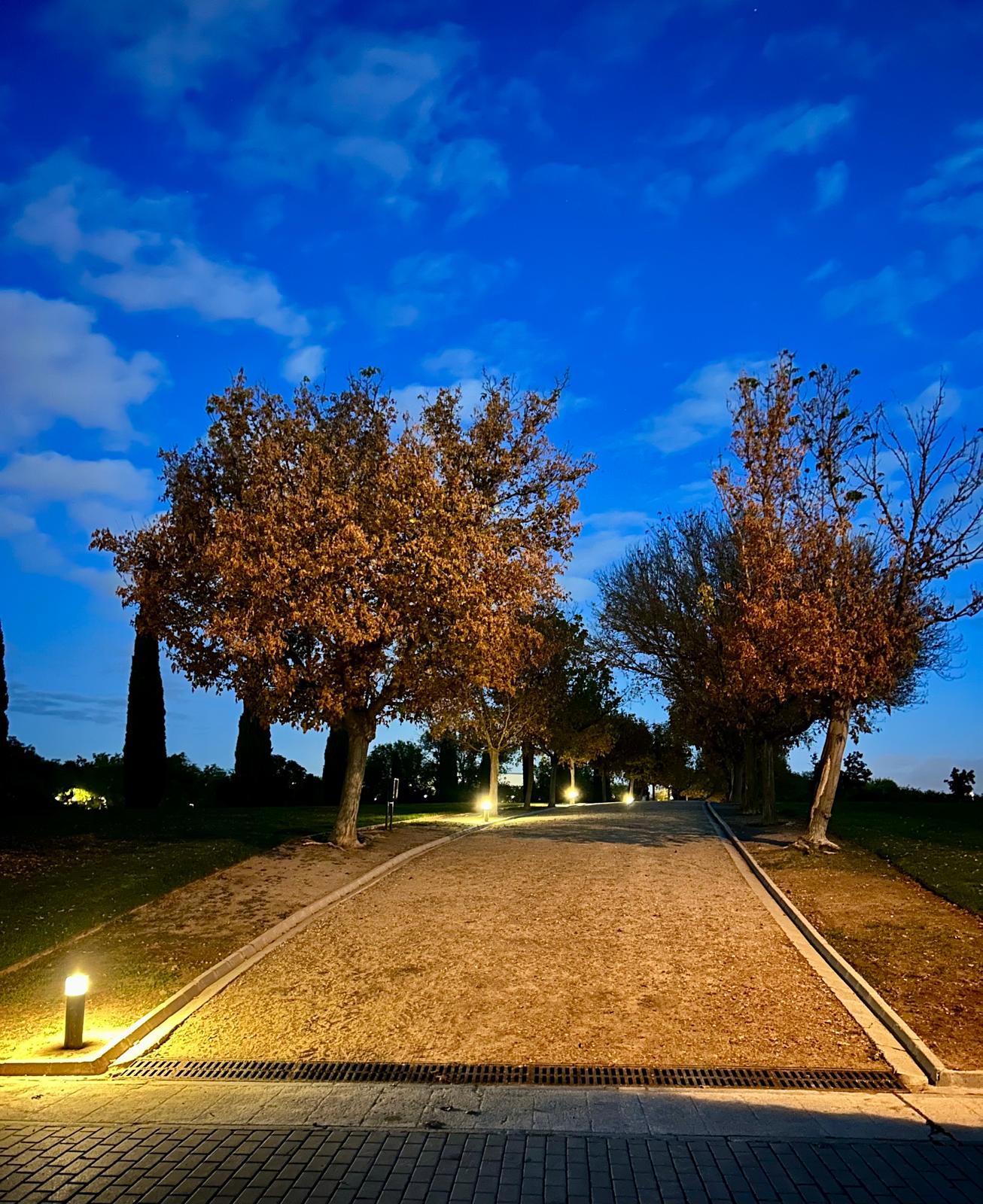
Volver muchas veces al mismo lugar tiene algo de engañoso. Al principio parece repetición. Los mismos caminos. El mismo canal. Los embarcaderos con las piraguas rojas. El olivar. Los granados. La plataforma de madera junto al Jardín Hebreo.Los conejos que han perforado la tierra bajo nuestros pies con una arquitectura que apenas alcanzamos a imaginar. Pero hace falta regresar muchas veces para descubrir que nada de eso permanece realmente igual. ¿Es posible recorrer el mismo camino?
Koly se encarga de dar la respuesta. Se detiene. Huele. Descarta una dirección. Elige otra. Hay un parque que se puede recorrer con los ojos y otro, seguramente mucho más complejo, que ella recorre con la nariz. Compartimos el suelo, pero no necesariamente el paisaje. Hay lugares a los que vuelve una y otra vez. Uno de ellos está junto a los pequeños canales del Jardín Hebreo, entre granados y vegetación. Incluso en los días más calurosos ocurre allí algo inmediato: baja la temperatura, baja el ruido, baja también la luz. El agua corre cerca de la tierra. Koly bebe, se refresca y acaba tumbándose sobre la grava. Resopla. Hay lugares en los que uno entra y se siente como si entrara en una pequeña iglesia de piedra.
There is something deceptive about returning to the same place again and again. At first, it feels like repetition. The same paths. The same canal. The jetties with their red kayaks. The olive grove. The pomegranate trees. The wooden platform beside the Hebrew Garden. The rabbits that have tunnelled through the ground beneath our feet with an architecture we can barely imagine. But it takes returning many times to discover that none of it ever truly remains the same. Is it possible to walk the same path?
Koly provides the answer. She stops. Sniffs. Rejects one direction. Chooses another. There is a park that can be explored with the eyes and another, surely far more complex, that she explores with her nose. We share the same ground, but not necessarily the same landscape. There are places she returns to again and again. One lies beside the small channels of the Hebrew Garden, among pomegranate trees and dense vegetation. Even on the hottest days, something happens there immediately: the temperature drops, the noise softens, the light dims too. Water runs close to the ground. Koly drinks, cools herself down and eventually lies on the gravel. She lets out a long breath. There are places one enters and feels as though one were stepping into a small stone church.
En invierno el parque es otro. Poco después de las ocho, todavía queda noche entre los árboles. El rocío de la madrugada cubre piedras, hierba y caminos. En invierno, a primera hora, el silencio es tan grande que las dos caminantes parecemos encargadas de estrenar la mañana.
El frío huele a limpio, casi duele al respirar profundamente. Y también suena. Una bota rompe el rocío con una nota grave. Las patas de Koly producen sonidos más ligeros. Casi como si pidieran permiso para no hacer daño. Hay menos colores. Verdes oscuros. Rojos color vino. Marrones. Tierra. Las especies perennes conservan sus hojas. Los árboles caducos permanecen desnudos durante semanas. Vistos deprisa, parecen haber dejado de hacer nada. No hay flores. No hay frutos. Apenas hay movimiento. Sólo esperan. Quizá por eso el invierno se interpreta tantas veces como una ausencia. Pero retirarse no es desaparecer. Bajo una corteza aparentemente inmóvil sigue ocurriendo algo.
In winter, the park is another place. Shortly after eight, there is still darkness among the trees. The night’s dew covers stones, grass and paths. On winter mornings, the silence is so complete that we two walkers seem almost responsible for setting the morning in motion.
The cold smells clean, almost painful when breathed in deeply. And it has a sound. A boot breaks through the dew with a low note. Koly’s paws produce lighter ones. Almost as though asking permission not to cause any harm. There are fewer colours. Dark greens. Wine reds. Browns. Earth. The evergreens keep their leaves. Deciduous trees remain bare for weeks. Seen in passing, they appear to have stopped doing anything at all. There are no flowers. No fruit. Hardly any movement. They simply wait. Perhaps that is why winter is so often interpreted as an absence. But withdrawing is not the same as disappearing. Beneath apparently motionless bark, something is still happening.
Tras meses de quietud y oscuridad, la primavera madrileña tampoco suele pedir permiso: Un día aparece un brote verde. Después otro. Más tarde un capullo. Resulta que el árbol no había muerto, sólo estaba esperando.
Unos días antes aún hacía falta abrigo y de repente sobra. La primera señal puede aparecer incluso antes que las hojas, porque el cuerpo se mueve de otra manera. Las manos dejan de esconderse y la ropa permite más libertad. Koly bosteza menos. Y, sobre todo, cambia el sonido. En primavera, cuando se entra en el parque, el canto de los pájaros ya ha empezado. Ese disco ya está puesto.
Regresan también otros perros. Más corredores. Más bicicletas. Más gente. El jardín privado del invierno vuelve a ser parque público. Y aparecen las pequeñas señales que sólo se perciben cuando se ha visto lo anterior. Una primera hoja resulta menos extraordinaria si no se recuerda aquella misma rama desnuda. Una flor apenas llama la atención si no se ha conocido antes la espera. Quizá una de las mejores maneras de descubrir algo nuevo sea volver suficientes veces al mismo sitio.
After months of stillness and darkness, spring in Madrid does not usually ask permission either. One day, a green shoot appears. Then another. Later, a bud. It turns out the tree was never dead. It was simply waiting.
Only a few days earlier, a coat was still necessary, and suddenly it is too much. The first sign can appear even before the leaves, because the body moves differently. Hands no longer need to hide away and clothing allows greater freedom. Koly yawns less. And, above all, the sound changes. In spring, by the time one enters the park, the birds have already begun to sing. The record is already playing.
Other dogs return too. More runners. More bicycles. More people. Winter’s private garden becomes a public park again. And the small signs begin to appear — the ones that can only be noticed because of what came before. A first leaf is less extraordinary if one does not remember that same branch bare. A flower barely attracts attention if one has never known the waiting that preceded it. Perhaps one of the best ways to discover something new is to return to the same place often enough.
Después todo se acelera. Madrid puede pasar de la primavera al verano sin ceremonias. En junio el agua deja de ser paisaje y se convierte en prioridad. Importa saber dónde están las fuentes. Importa la sombra. Importa conocer qué caminos discurren cerca del canal. Los patos avanzan con sus crías. Las carpas se mueven bajo la superficie. Las ranas ocupan las rocas que sobresalen del agua como pequeñas propietarias al sol. Los aspersores dejan la hierba húmeda, entonces sí apetece acercarse. Koly se tumba sobre ella y consigue poner en contacto con el frescor la barriga, los lomos, las patas. A la salida de la zona más umbría aparece el olivar. Allí el verano ya no se esconde. Los olivos reciben el sol.
Then everything accelerates. Madrid can move from spring into summer without ceremony. In June, water stops being part of the scenery and becomes a priority. It matters where the fountains are. Shade matters. Knowing which paths run close to the canal matters. Ducks move through the water with their young. Carp glide beneath the surface. Frogs occupy the rocks rising above the water like tiny owners basking in the sun. The sprinklers leave the grass damp; now it is inviting. Koly lies down on it, pressing her belly, her back and her paws against the coolness. Beyond the shadiest part of the park lies the olive grove. There, summer makes no attempt to hide. The olive trees take the sun.
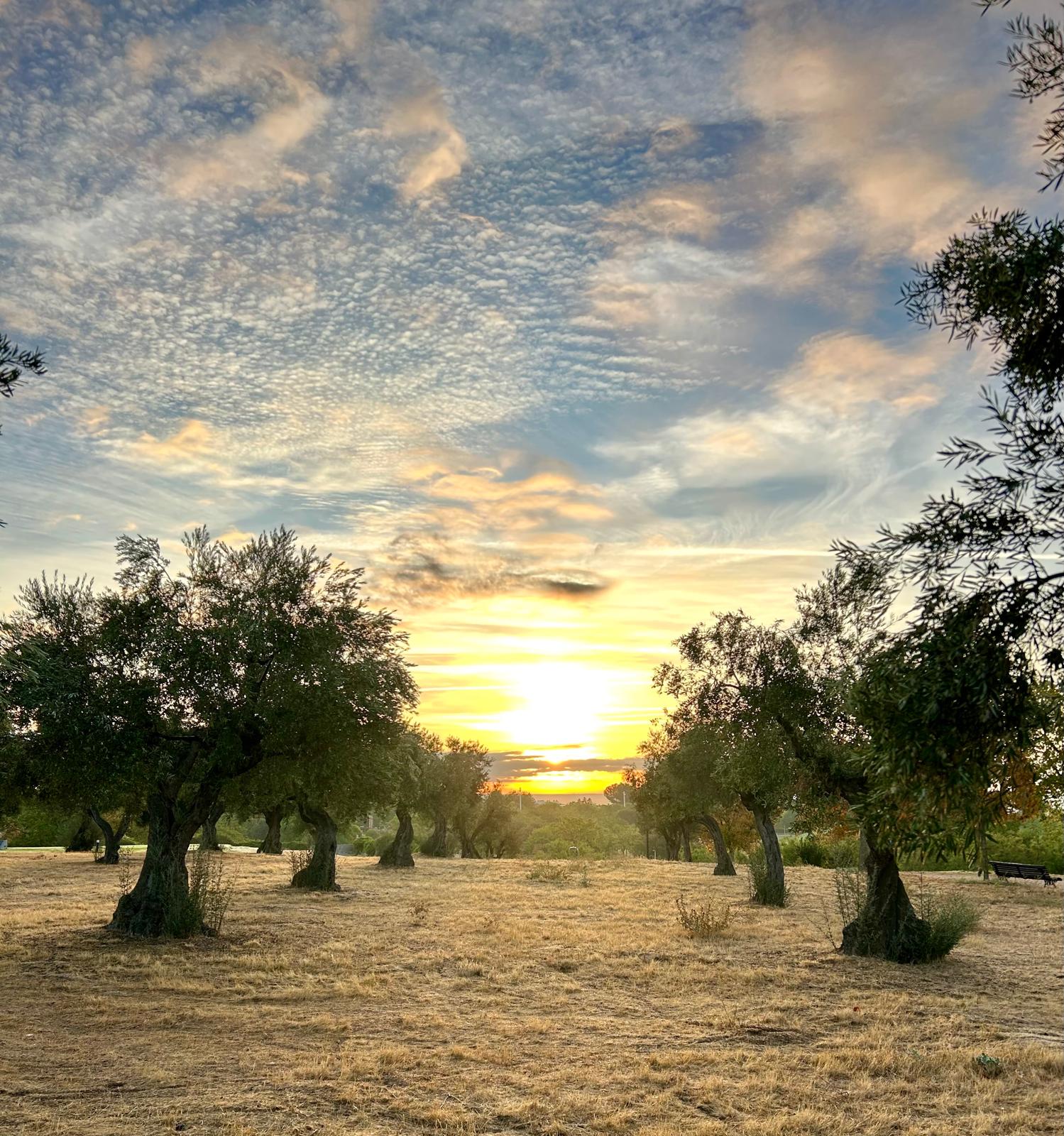
Las flores empiezan lentamente a convertirse en aceitunas. Los granados llevan otro ritmo. Sus grandes flores se redondean. Crecen. Empiezan a pesar.
El canto de los pájaros empieza a mezclarse con el zumbido de los insectos que se mueven entre las flores. Hubo un tiempo en que Koly perseguía mariposas y escarabajos con verdadero entusiasmo. Ahora muchos parecen haber pasado a formar parte del decorado. Las aves todavía merecen su atención. Los conejos, definitivamente, también. Reconocemos estos lugares, aunque no permanezcan exactamente igual. Nosotras también hemos cambiado.
Their flowers begin, slowly, to become olives. The pomegranate trees keep a different rhythm. Their large flowers begin to round into fruit. They grow. They begin to carry weight.
The birdsong starts to mingle with the hum of insects moving among the flowers. There was a time when Koly chased butterflies and beetles with genuine enthusiasm. Now many of them seem to have become part of the scenery. Birds still deserve her attention. Rabbits, most definitely, do too. We recognise these places, even though they never remain exactly the same. We have changed as well.
Después llega un momento en que dejamos de volver. Un día de verano, el paisaje cambia por completo: La tierra se convierte en arena, los senderos, en rocas húmedas. Las plantas aromáticas, en algas. Las piñas, en hojas secas de palmera. El agua deja de estar encerrada en canales. Ocupa el horizonte, es el Mar de Alborán. El de siempre, pero nuevo otra vez.
El viento cambia casi a diario. Lo reducimos a veces a dos palabras —Levante, Poniente—, aunque sus combinaciones no son tan simples. Hay días de brisa. Otros de una calma húmeda y pegajosa. Y algunos en los que una masa de aire arrolladora (reventón térmico, lo llaman) recuerda que la naturaleza no tiene ninguna obligación de resultar confortable.
Cambian también los árboles: Palmeras, ficus, buganvillas. Los olivos permanecen algo más lejos del agua. En la orilla aparecen algas, piedras cubiertas de salitre y pequeños restos dejados por la marea. Las rocas mojadas pueden tener además una fina capa de musgo que modifica considerablemente su coeficiente de fricción. Koly suele descubrirlo después de haber depositado en ellas una confianza superior a la recomendable. Algunos resbalones forman parte del verano.
El mar merece toda su atención. Cuando está tranquilo y transparente, entra confiada. Avanza. Nada. Busca un palo. A veces casi quedan fuera sólo las orejas.
Cuando el fondo desaparece y las olas empiezan a romper con espuma, la relación de confianza cambia. Una ola avanza. Koly espera. Calcula. Y, justo antes de que pueda alcanzarla, corre hacia tierra firme. La siguiente vuelve a intentarlo. Hay juegos que no necesitan a nadie que explique sus reglas.
Then comes a moment when we stop returning. One summer day, the landscape changes completely. Earth becomes sand; paths become wet rocks. Aromatic plants give way to seaweed. Pine cones become dried palm leaves. Water is no longer contained within channels. It fills the horizon. The Alboran Sea. The same one as ever, and new once again.
The wind changes almost daily. We sometimes reduce it to two words — Levante, Poniente — although its combinations are not nearly so simple. Some days bring a breeze. Others, a humid and sticky stillness. And on some, an overwhelming blast of air — a heat burst, they call it — reminds us that nature is under no obligation to be comfortable.
The trees change too. Palms. Ficus. Bougainvillea. The olive trees remain a little farther from the water. Along the shore lie seaweed, salt-covered stones and small remnants left behind by the tide. Wet rocks may also carry a thin layer of moss that considerably alters their coefficient of friction. Koly usually discovers this after placing rather more confidence in them than advisable. A few slips are simply part of summer.
The sea commands her full attention. When it is calm and clear, she enters confidently. Moves forward. Swims. Searches for a stick. Sometimes almost nothing remains above the water but her ears.
When the seabed disappears from view and the waves begin to break into foam, her confidence changes. A wave approaches. Koly waits. Calculates. And just before it can catch her, she runs back towards solid ground. The next wave tries again. Some games need no one to explain the rules.
Hacia el oeste está el faro de Sacratif. Dos destellos. Dos segundos entre ellos. Diez segundos. Otra vuelta. Lleva décadas repitiendo su cadencia de luz, vigilando la mar, pero la mar no ha repetido una sola ola.
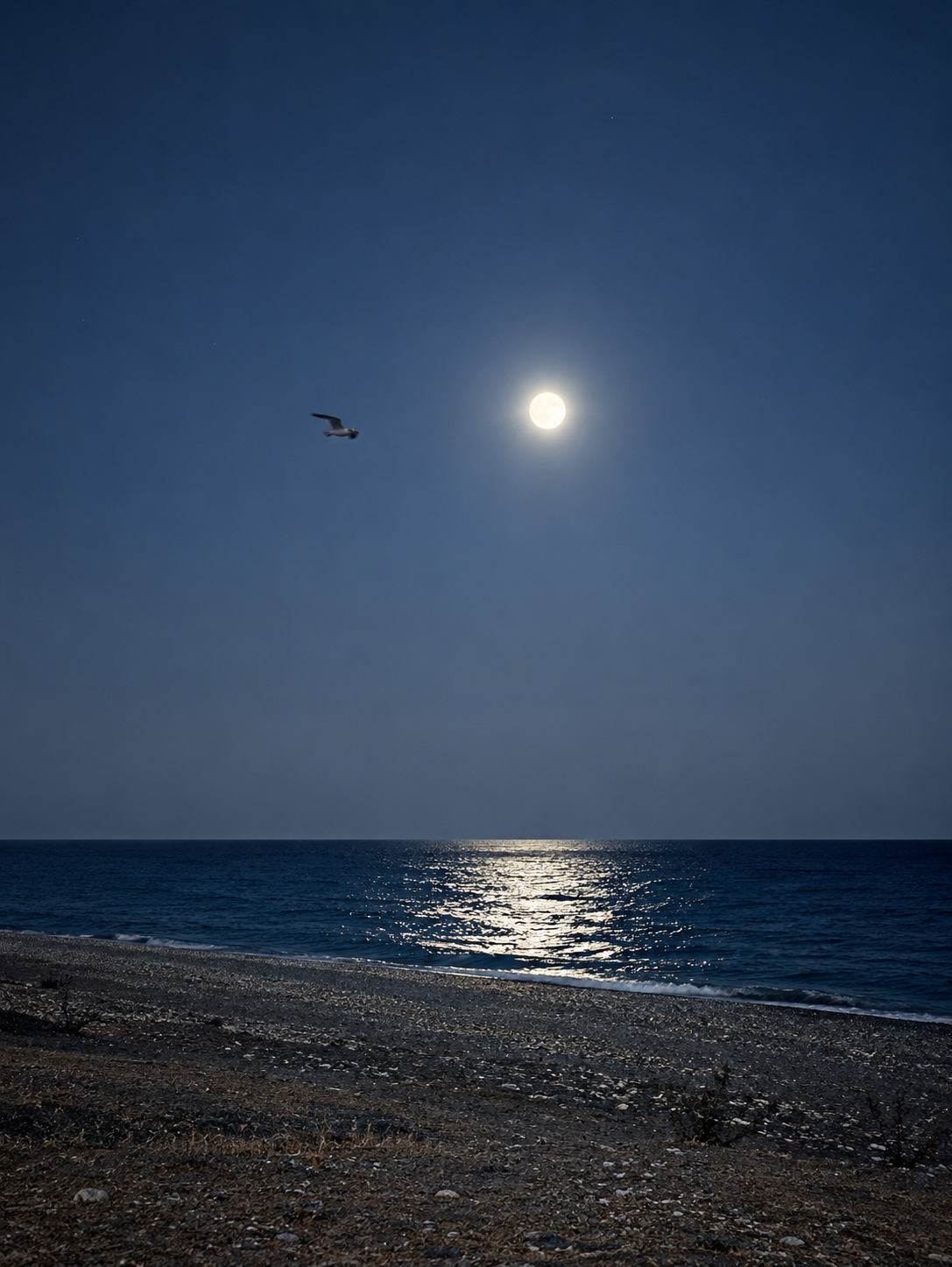
Por la noche, alrededor del faro, casi todo desaparece. Algunas luces cálidas a la espalda. La espuma blanca cuando rompe cerca de la orilla. La luna, algunas noches, trazando un reflejo sobre la superficie oscura. Una vieja historia aseguraba que bañarse dentro de ese reflejo durante una noche de luna llena asegura siete años de belleza. ¿Más belleza? Sobraba belleza alrededor.
Las olas pequeñas llegan con un sonido suave. Las grandes se deshacen en la orilla con un crujido húmedo que llena todo el espacio. Hay pocas melodías que soporten un volumen tan alto sin convertirse en ruido. El mar es una de ellas.
A veces todavía cuento los destellos. No por necesidad. Sólo para comprobar que el faro mantiene el acuerdo. Y ocurre algo curioso: una vuelta parece lenta y la siguiente, demasiado rápida. El tiempo medido permanece. El tiempo vivido no.
To the west stands the Sacratif lighthouse. Two flashes. Two seconds between them. Ten seconds. Another turn. For decades it has repeated the same cadence of light, watching over the sea, while the sea has never repeated a single wave.
At night, almost everything around the lighthouse disappears. A few warm lights behind us. The white foam when it breaks close to shore. On some nights, the moon drawing a reflection across the dark surface. An old story claimed that bathing within that reflection under a full moon guaranteed seven years of beauty. More beauty? There was already more than enough all around.
Small waves arrive with a gentle sound. Larger ones collapse onto the shore with a wet crack that fills the entire space. There are very few melodies that can sustain such volume without becoming noise. The sea is one of them.
Sometimes I still count the flashes. Not because I need to. Simply to make sure the lighthouse is still keeping to the agreement. And something curious happens: one turn seems slow, the next far too quick. Measured time remains constant. Lived time does not.
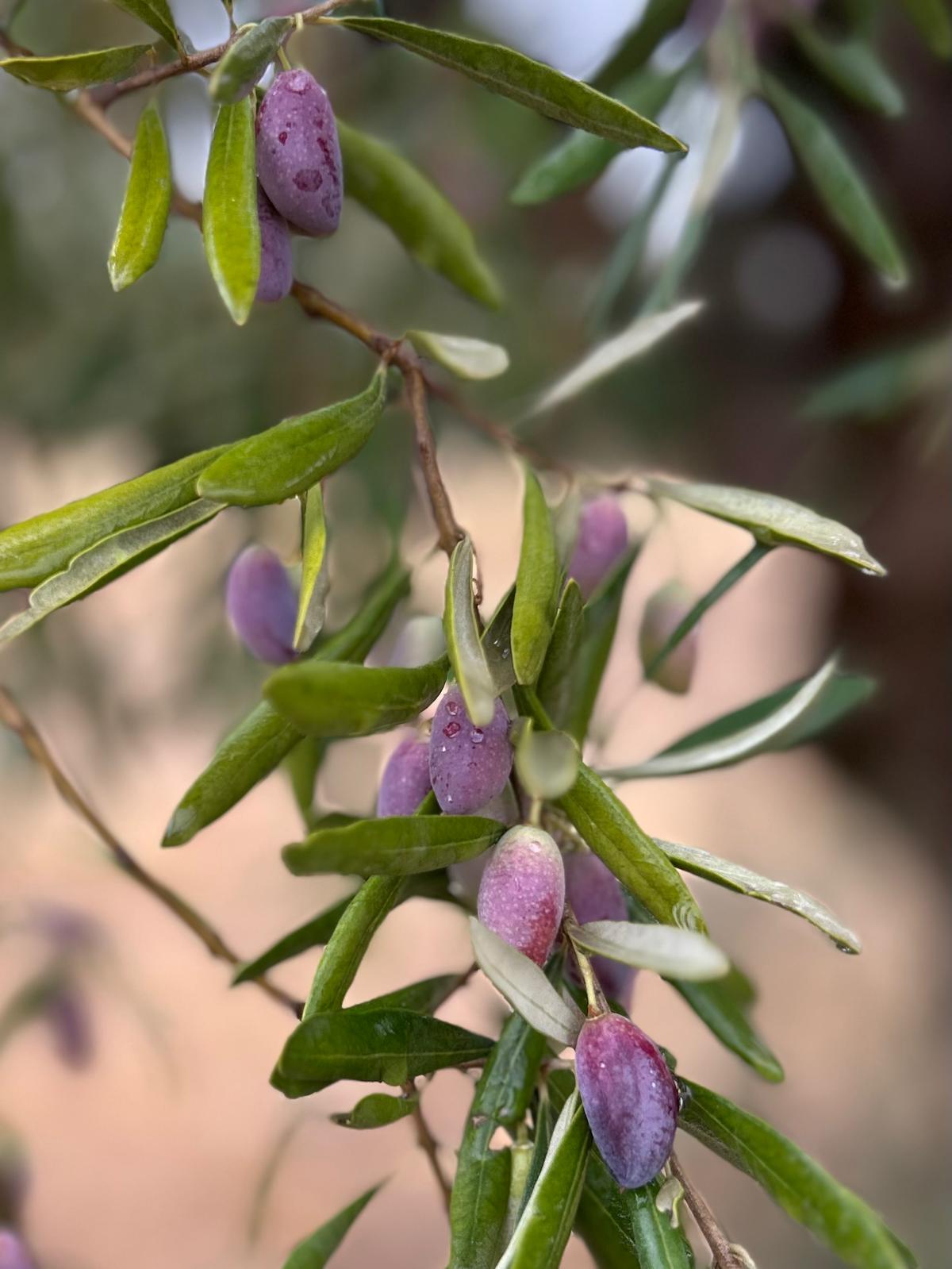
Cuando acaba el verano, volvemos al parque. Durante las primeras semanas todavía puede hacer calor. Las especies de hoja perenne conservan buena parte del verde. Pero se nota una ausencia, hay muchas menos flores. Algunas resisten, como las abelias, que anuncian su presencia desde lejos; llega su olor. Quedan algunas rosas. También hibiscos, cuya aparente fragilidad resulta bastante engañosa después de haber atravesado el verano madrileño. Los granados han avanzado deprisa, y aunque algunos frutos siguen colgados, otros se han abierto y algunos han terminado en la tierra. Las aceitunas no tienen prisa. Siguen creciendo, acumulando sol. El olivo es lento y el granado se precipita, pero ninguno llega tarde.
When summer ends, we return to the park. During the first few weeks, it can still be hot. The evergreens retain much of their green. But an absence can be felt: there are far fewer flowers. Some hold on, like the abelias, which announce their presence from a distance; their scent arrives first. A few roses remain. Hibiscus flowers too, their apparent fragility proving rather deceptive after enduring a Madrid summer. The pomegranate trees have moved quickly, and although some fruit still hangs from the branches, others have split open and some have fallen to the ground. The olives are in no hurry. They continue to grow, storing sunlight. The olive tree is slow and the pomegranate rushes ahead, but neither is late.
Y entonces, semanas después del regreso, ocurre. El otoño de verdad. No porque lo diga el calendario, sino porque una mañana se nota en la nariz y en las manos. Porque el sol sigue demasiado bajo, porque las copas de los árboles consiguen ocultarlo durante un rato más. Porque las sombras son más largas. Porque el césped mojado ha dejado de resultar apetecible. Y porque vuelve aquel olor a hierba recién cortada.
Todo sigue allí. Pero nada está exactamente como estaba. Quizá ésa sea la paradoja de los lugares a los que regresamos. Permanecen porque cambian.
Un árbol permanece mientras crece. Un parque mientras aparecen y desaparecen especies, sonidos, sombras y olores. El mar mientras ninguna ola consigue ni pretende ser igual a la anterior. Volver no sirve para comprobar que nada ha cambiado. Sirve para poder reconocer cuánto lo ha hecho.
Algunas cosas dejan de llamar nuestra atención porque lo extraordinario acaba incorporándose al paisaje. Un árbol que hemos visto cientos de veces. Quizá por eso mirar requiere cierto esfuerzo, no para encontrar algo excepcional, sino para seguir encontrando algo en lo cotidiano.
Son poco más de las ocho de la mañana. El parque sigue despertando. Koly se detiene. Ha encontrado algo que yo no puedo percibir. Espera. Olfatea. Y cambia de dirección. El camino previsto deja de existir. A unos metros, la luz consigue por fin superar las copas de los árboles. Y durante unos segundos todo parece distinto. Y todo está exactamente donde debe estar.
Seguimos andando.
Por el mismo camino.
And then, weeks after our return, it happens. Autumn proper. Not because the calendar says so, but because one morning you feel it in your nose and in your hands. Because the sun is still too low. Because the tree canopies manage to hide it for a little longer. Because the shadows are longer. Because wet grass is no longer inviting. And because that scent of freshly cut grass returns.
Everything is still there. But nothing is exactly as it was. Perhaps that is the paradox of the places we return to. They remain because they change.
A tree remains while it grows. A park remains while species, sounds, shadows and scents appear and disappear. The sea remains while no wave manages — or even tries — to be the same as the one before it. Returning is not a way of checking that nothing has changed. It allows us to recognise how much has.
Some things stop attracting our attention because the extraordinary eventually becomes part of the landscape. A tree we have seen hundreds of times. Perhaps that is why looking requires a certain effort — not the effort of finding something exceptional, but of continuing to find something within the everyday.
It is just after eight in the morning. The park is still waking. Koly stops. She has found something I cannot perceive. She waits. Sniffs. And changes direction. The path we had in mind disappears. A few metres ahead, the light finally clears the treetops. And for a few seconds, everything looks different. And everything is exactly where it should be.
We keep walking.
Along the same path.
El mismo camino · The Same Path